Thank you for your interest in how this product was made.
Good to know that your product was made in a fully transparent network.
Network traceability
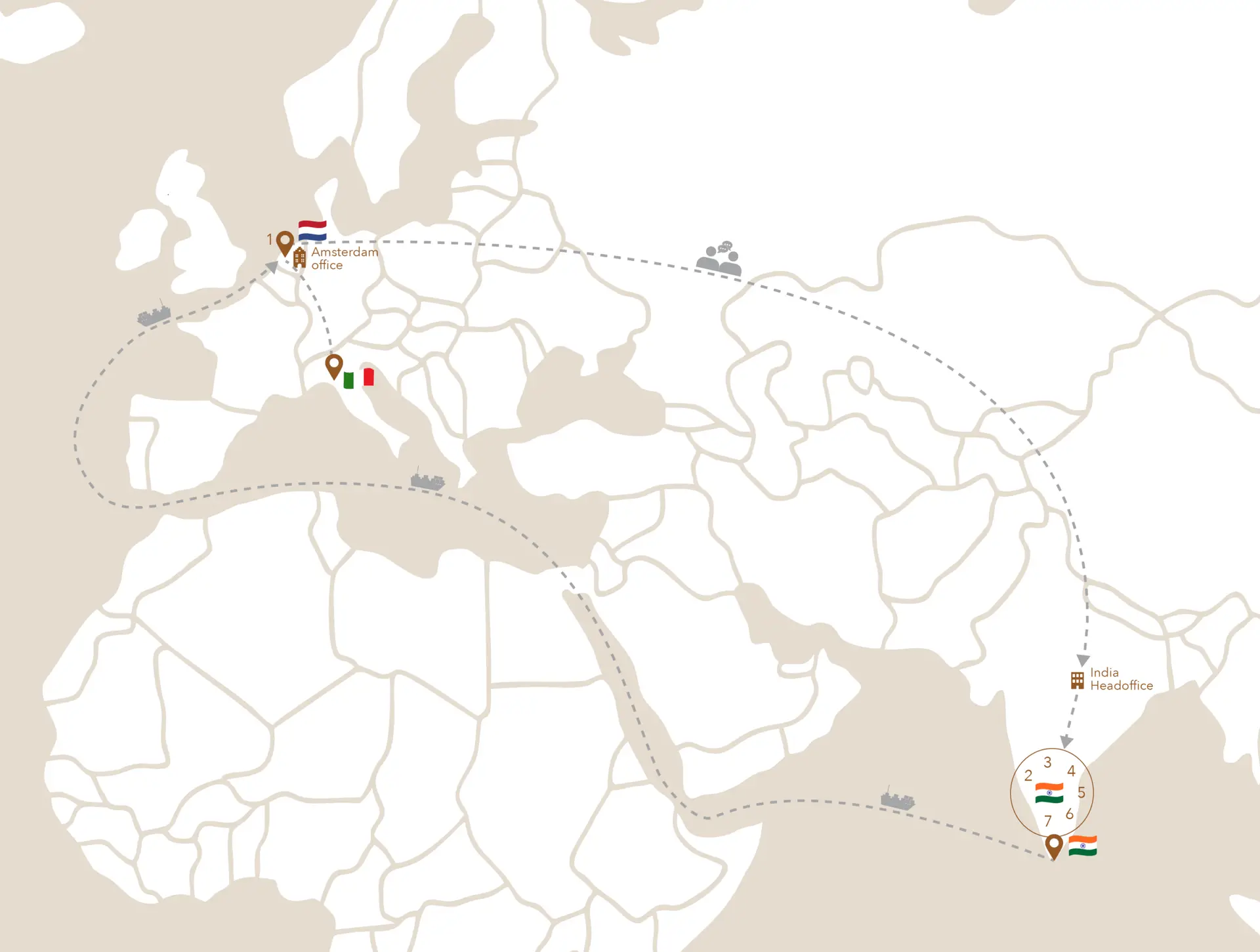
1. Calculating impact
Frette & nxtile developed your product and calculated the impact savings. We created this platform to inform everyone about the process and the positive impact we’re making together.
2. Product specifications
Frette’s requirements are translated to specific raw material needs.
3. Waste collection and processing
A specific mix of cotton waste is collected, reprocessed and checked.
4. Spinning
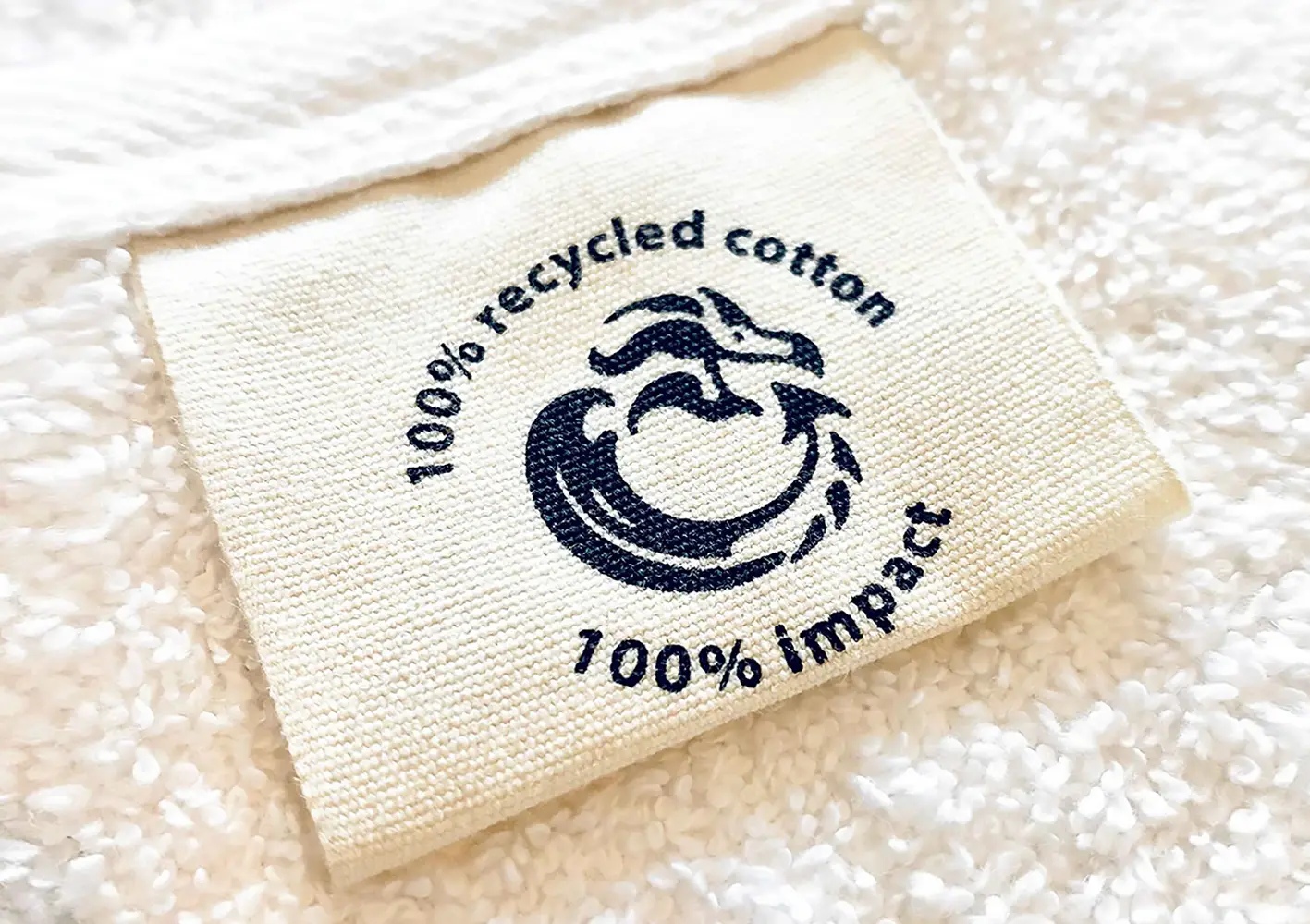
A patented process converts the 100% recycled cotton into high-quality yarn at a certified spinner.
5. Weaving
The yarn is woven into high quality fabric in a solar powered factory.
6. Stitching
Your product is made in a socially & SMETA certified location taking good care of the workers wellbeing and assembled by using a sustainable production process.
7. Transportation
Your product is transported over sea from Mundra to Rotterdam and then forwarded to the Frette warehouse.
Step 1
Calculating impact
Frette & nxtile developed your product and calculated the impact savings. We created this platform to inform everyone about the process and the positive impact we’re making together.
Step 2
Product specifications
Frette’s requirements are translated to specific raw material needs.
Step 3
Waste collection and processing
A specific mix of cotton waste is collected, reprocessed and checked.
Step 4
Spinning
A patented process converts the 100% recycled cotton into high-quality yarn at a certified spinner.
Step 5
Weaving
The yarn is woven into high quality fabric in a solar powered certified factory.
Step 6
Stitching
Your product is made in a socially certified location taking good care of the workers wellbeing and created by using a sustainable production process.
Step 7
Transportation
Your product is transported over sea from Mundra to Rotterdam and then forwarded to the Frette warehouse.
FAQ
Below, we are listing some Frequently Asked Questions that have come up in conversations with our clients, peers and partners.
The market for recycled textiles is dynamic and rapidly expanding. While innovations in the industry make new circular solutions available, governments in the EU and around the world are introducing regulations to push for a clean and sustainable textile sector. At nxtile, we always stay at the forefront of new developments, incorporating new insights and practices into our processes.
Recycling cotton into textile products is not new, but until recently manufacturers could not ensure the required strength and durability without blending in virgin cotton, polyester, or other plastics. In contrast, nxtile products are made using a patented process that turns 100% cotton waste into high-quality textiles. We are the first company in Europe to produce non-blended cotton-waste textiles at scale, achieving significant environmental benefits.
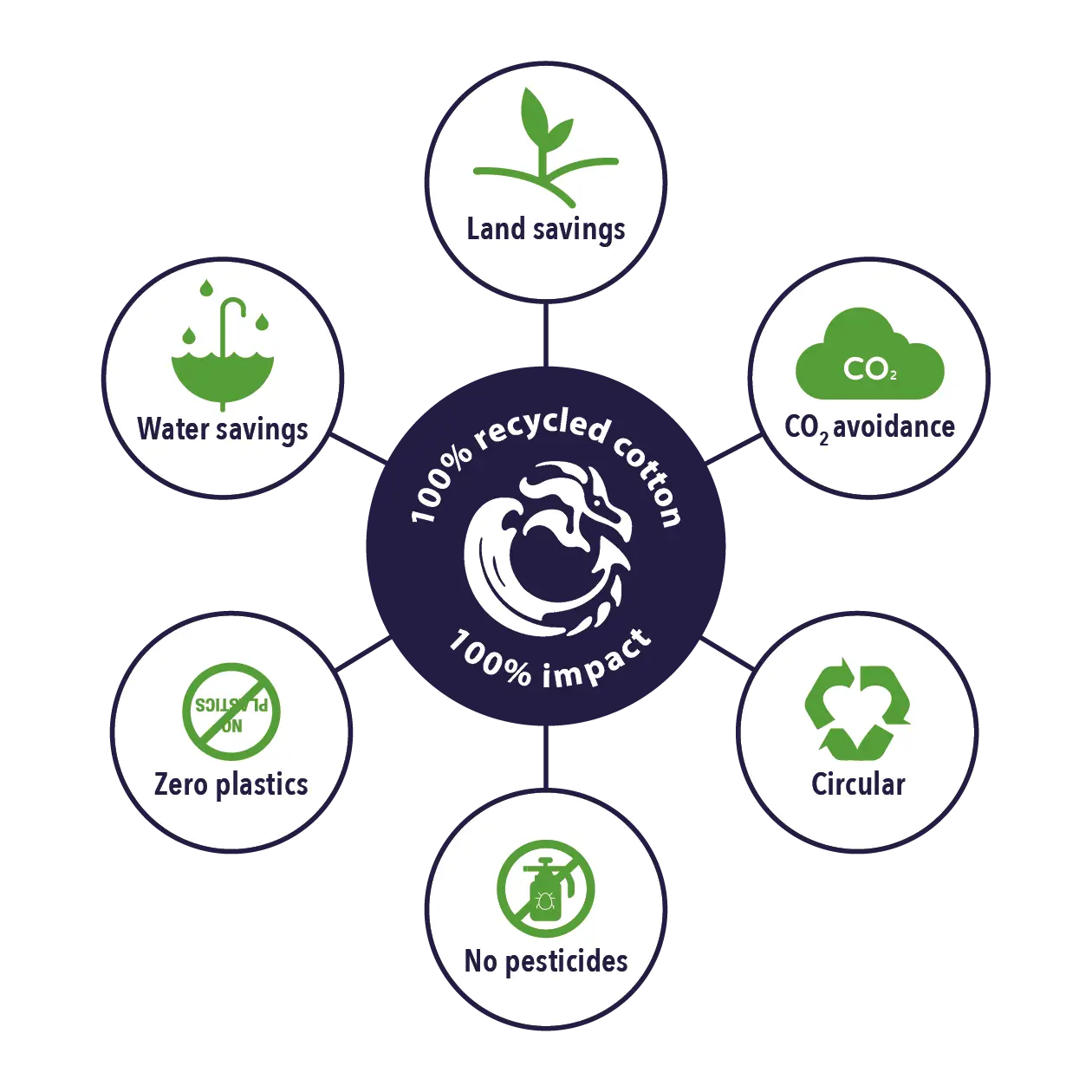
By using only cotton waste in production, no new cotton needs to be grown. This results in substantial savings in land and water use, while also significantly reducing CO₂ emissions. On top, no new pesticides are needed and zero plastics is used.
By using cotton waste, there is no need to grow new cotton to produce fresh textiles. Land savings are calculated as the number of square meters (m²) that are no longer required for cotton cultivation—and can instead be used for other crops.
Growing conventional cotton requires large amounts of water. By using cotton waste instead of new cotton, this water is effectively saved. Water savings are calculated as the number of liters that no longer need to be used for cultivation and can therefore be preserved for other purposes.
CO₂ emissions are reduced because there is no need to grow and harvest new cotton. This eliminates a significant portion of emissions generated by machinery used on cotton farms. Savings are calculated as the number of kilograms of CO₂ that are no longer released into the atmosphere.